How to Use Seasonings for Flavorful Dishes
Updated: Apr 27
Cooking is an art, and like any artist, a chef needs the right tools to create a masterpiece. One of the most essential tools in a cook's arsenal is seasoning. The right blend of spices and herbs can transform a bland dish into a flavorful delight. In this guide, we will explore how to effectively use seasonings to enhance your cooking, making every meal a memorable experience.
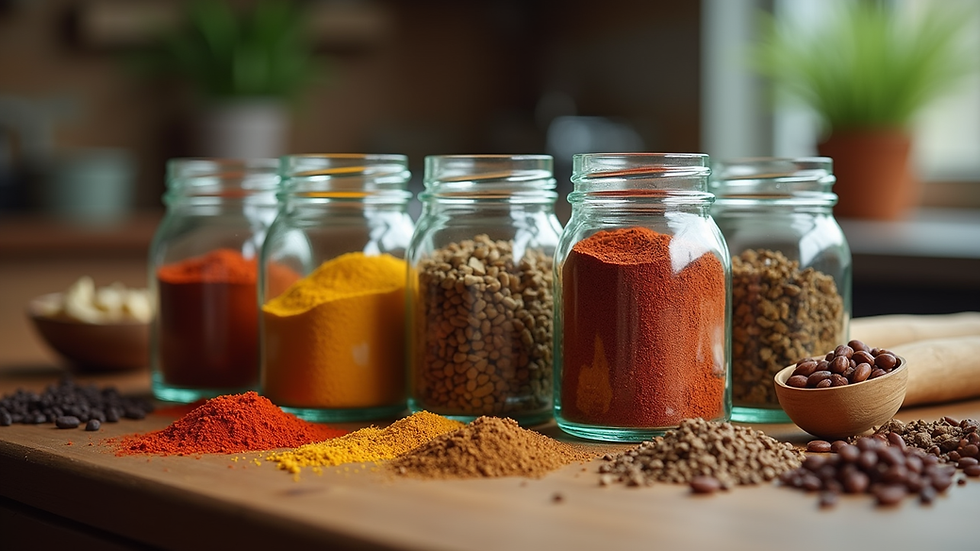
Understanding Seasonings
What Are Seasonings?
Seasonings are substances added to food to enhance its flavor. They can be derived from various sources, including:
Herbs: These are the leafy parts of plants, often used fresh or dried. Examples include basil, parsley, and cilantro.
Spices: These are typically derived from seeds, roots, or bark. Common spices include cumin, cinnamon, and black pepper.
Salt: Often considered the most basic seasoning, salt enhances the natural flavors of food.
Acids: Ingredients like wine, vinegar and citrus juice can brighten flavors and add depth.
The Role of Seasonings in Cooking
Seasonings serve multiple purposes in cooking:
Flavor Enhancement: They amplify the natural flavors of the ingredients.
Balance: They can help balance flavors, such as sweetness with acidity.
Aroma: Many seasonings add a delightful aroma that can make dishes more appealing.
Color: Certain spices can add vibrant colors to your meals, making them visually appealing.
Choosing the Right Seasonings
Consider the Dish
When selecting seasonings, consider the main ingredients of your dish. For example:
Meat Dishes: Use robust spices like paprika, garlic powder, and black pepper.
Vegetable Dishes: Fresh herbs like thyme, rosemary, or dill can enhance the natural flavors.
Seafood: Light seasonings such as lemon zest, dill, or coriander work well.
Experiment with Combinations
Don't be afraid to experiment with different combinations of seasonings. Here are a few classic pairings:
Italian: Basil, oregano, and garlic.
Mexican: Cumin, chili powder, and cilantro.
Indian: Turmeric, cumin, and coriander.
Fresh vs. Dried
Both fresh and dried seasonings have their place in cooking. Fresh herbs can provide a bright, vibrant flavor, while dried herbs and spices often have a more concentrated taste. As a general rule:
Use fresh herbs in the last few minutes of cooking to preserve their flavor.
Use dried herbs earlier in the cooking process to allow their flavors to develop.
Techniques for Using Seasonings
Seasoning at Different Stages
The timing of when you add seasonings can significantly impact the final flavor of your dish. Here are some guidelines:
At the Beginning: Add spices like cumin or coriander at the start of cooking to allow their flavors to infuse into the dish.
Midway Through Cooking: Add salt and pepper during cooking to adjust flavors as needed.
At the End: Fresh herbs and acidic ingredients should be added at the end to maintain their bright flavors.
Tasting as You Go
One of the most important skills in cooking is tasting your dish as you go. This allows you to adjust the seasoning to your preference. Here’s how to do it effectively:
Start with a Small Amount: Begin with a little seasoning, as you can always add more.
Mix Well: Ensure the seasoning is evenly distributed before tasting.
Adjust Gradually: If it needs more flavor, add a pinch more and taste again.
Using Salt Wisely
Salt is a powerful seasoning that can enhance flavors but can also overpower a dish if used incorrectly. Here are some tips:
Use Kosher Salt: It’s easier to control the amount you use compared to table salt.
Season in Layers: Add salt at different stages of cooking for a more complex flavor.
Taste Before Serving: Always taste your dish before serving to ensure it’s seasoned to your liking.
Common Seasoning Mistakes
Over-Seasoning
One of the most common mistakes is over-seasoning. It’s easy to get carried away, especially with strong spices. Always start with a small amount and build up gradually.
Ignoring Freshness
Spices lose their potency over time. Make sure to check the expiration dates on your spices and replace them as needed. Fresh spices can make a significant difference in flavor.
Not Balancing Flavors
A well-seasoned dish has a balance of flavors. If a dish is too salty, try adding a bit of sweetness or acidity to counteract it. For example, a dash of honey can balance out a salty dish.
Creative Uses for Seasonings
Marinades
Marinades are a fantastic way to infuse flavor into meats and vegetables. A simple marinade can include:
Acid: Such as wine, vinegar or citrus juice.
Oil: To help carry the flavors.
Seasonings: A mix of herbs and spices.
For example, a marinade for chicken could include olive oil, lemon juice, garlic, and rosemary.
Seasoning Blends
Salty Bob's seasoning blends can be a fun way to your cooking. Here are a few ideas:
Taco Seasoning
Sweet & Smokey
Steak Seasoning
Infused Oils
Infused oils can add a unique flavor to your dishes. Simply heat oil and add herbs or spices, allowing them to steep. Use infused oils for drizzling over salads or finishing dishes.
Conclusion
Using seasonings effectively can elevate your cooking from ordinary to extraordinary. By understanding the role of different seasonings, experimenting with combinations, and applying proper techniques, you can create flavorful dishes that impress your family and friends. Remember to taste as you go and adjust your seasonings to achieve the perfect balance.
Now, it’s time to get creative in the kitchen! Start experimenting with your favorite Salty Bob's Seasonings and discover new flavors that will make your meals unforgettable. Happy cooking!

Comments